Francesco Rosi
“In Search of the Truth”
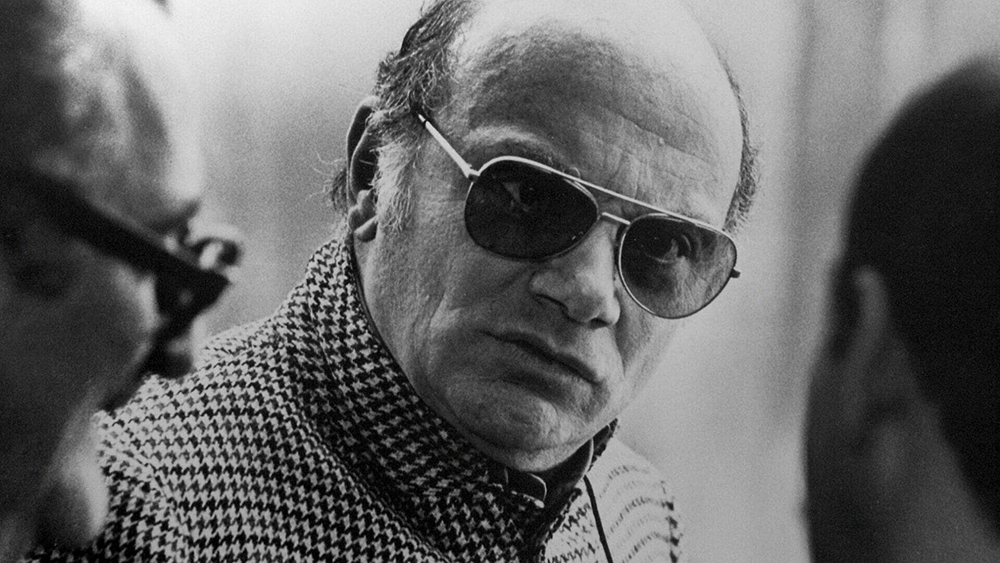
Naples, 1922. Francesco Rosi is born in the Campanian capital and carries with him, all his life, the imprint of that contradictory city: beauty and poverty, culture and Camorra, splendour and decay. It is from Naples that his relentless gaze on Italian reality is born.
“In Search of the Truth” – there could be no more fitting title for a director who made investigative cinema his reason for living. Rosi is not content to tell stories: he wants to understand, to dig, to denounce. His cinema is an act of civic resistance.
His career begins as Luchino Visconti’s assistant on “La Terra Trema” (1948) and “Senso” (1954). It is a fundamental school: from Visconti he learns formal rigour, attention to detail and the ability to turn history into epic. But Rosi soon finds his own path, different from his master’s: not historical melodrama, but investigation of the present.
“The Challenge” (1958) explores the Neapolitan Camorra. “Salvatore Giuliano” (1962) reconstructs, with an almost journalistic method, the life and death of the Sicilian bandit, interweaving Mafia, politics and the State. “Hands over the City” (1963), Golden Lion in Venice, denounces property speculation in Naples with a line that became famous: “The characters and events are imaginary, but the social reality that produces them is authentic.”
Then came “The Mattei Affair” (1972), Palme d’Or at Cannes, about the ENI president who died in mysterious circumstances; “Lucky Luciano” (1973) about the Italian-American boss; “Illustrious Corpses” (1976) on the strategy of tension; “Christ Stopped at Eboli” (1979) from Carlo Levi’s novel; up to “Three Brothers” (1981) and “Carmen” (1984).
In this documentary, Rosi shares his personal memories with Donatella Baglivo: his Neapolitan childhood, meeting Visconti, the battles to make uncomfortable films, the threats he received, and his conviction that cinema must be a tool of knowledge and truth.
Francesco Rosi passed away in 2015, but his cinema remains an unsurpassed model of civic commitment.
Credits
Texts, editing and direction: Donatella Baglivo
Assistant director: Maurizio Baglivo
Executive producer: Adriano Zonin
Directors of photography: Edmondo Pisani, Fabrizio Mengoni, Roberto Romei
Camera operators: Gianni Maitan, Alfonso Feliziani, Roberto Lanciotti
Camera assistant: Antonio Lalli
Sound technicians: François Mazzonna, Paolo Panno
Audio mixing, soundtrack editing, graphics: Stuart Mabey
Editing: Stuart Mabey
Research and documentation: Antonella Valeriani, Domenico Vitucci
Original music: Federico Arezzini, Grimoaldo Macchia, Mauro Pacini
Opening theme music: Pietro Grignani
Historical archive manager: Kemal Tugal
Foreign film research: Jonathan Eugenio Zonin
Film archive manager: Silvano Brugnorotto
Post-production: CIAK 2000 S.r.l.
Music publishing: CIAK 2000
Copyright: CIAK 2000 S.r.l. Roma