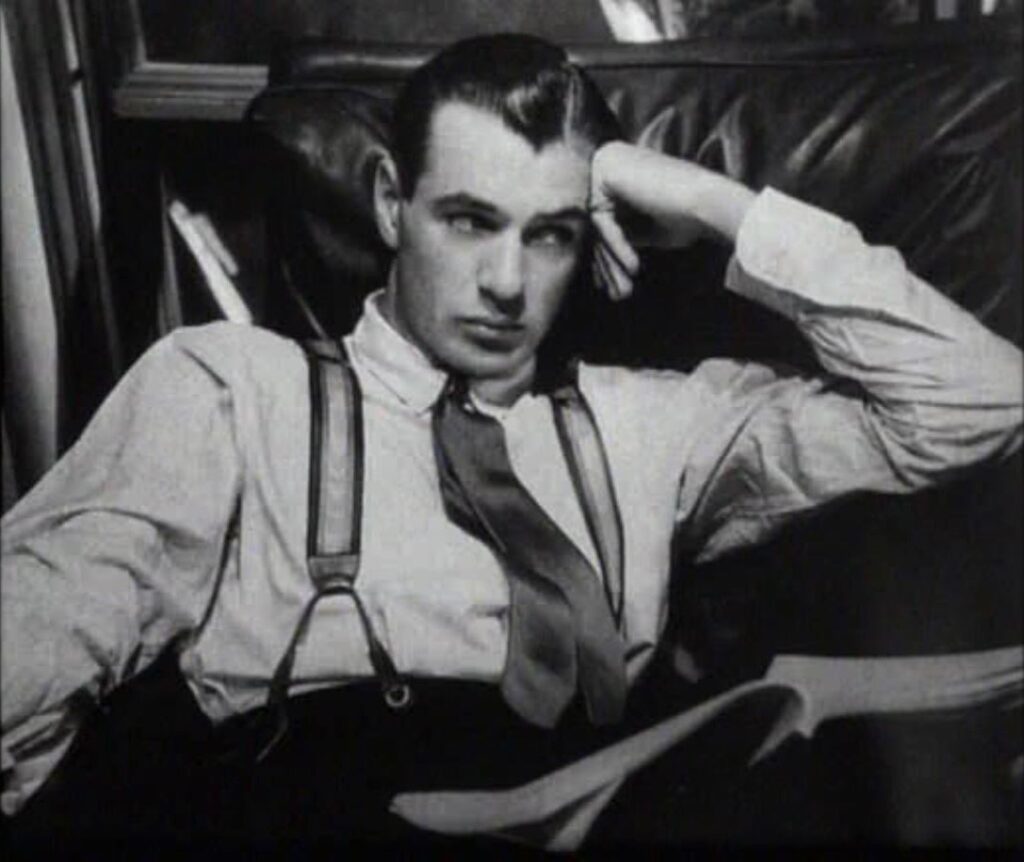
Gary Cooper
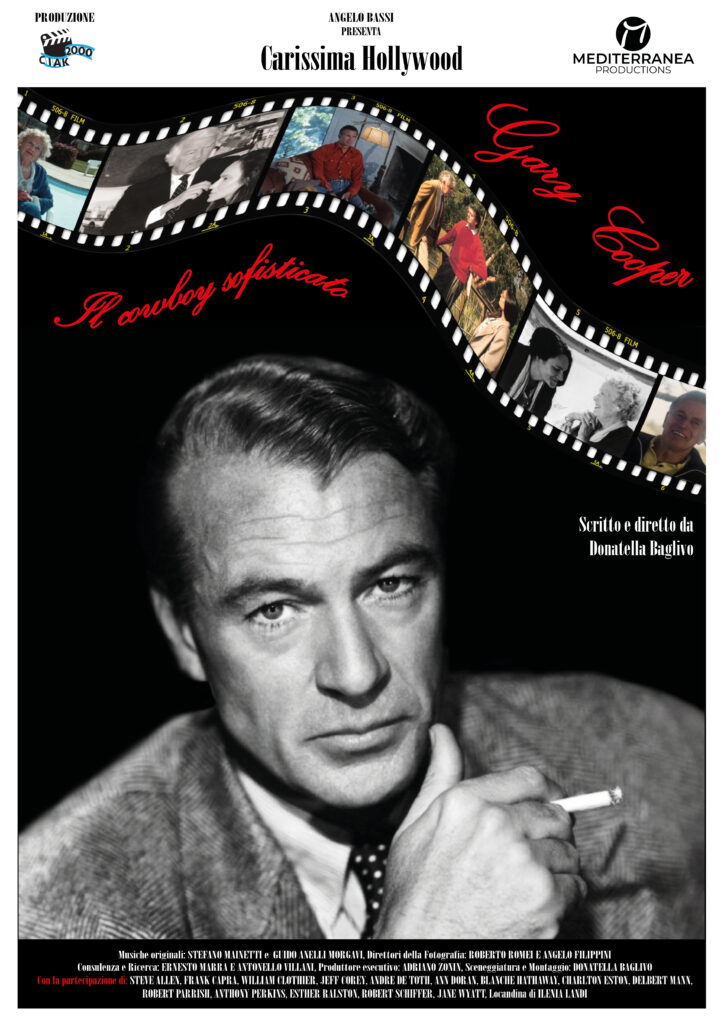
Helena, Montana, 1901. Frank James Cooper is born in the heart of the American West, son of English immigrants. He grows up on a ranch, learns to ride before he can even walk. That world—the wide open spaces, the silence, the wild nature—would remain forever imprinted in his way of being an actor.
“The Sophisticated Cowboy”—a perfect oxymoron to describe Gary Cooper. Tall, handsome, elegant, yet with the authentic roughness of someone who grew up among horses and prairies. On screen he could be read like an open book: a glint of the eye, a slight movement of the lips rendered any line superfluous.
In those long crucial sequences that made cinema history, all he had to do was suddenly quicken his pace or begin to slow it, arch or lower his back, and the audience went straight to the heart of the character. His determination or disbelief appeared evident without need for words.
A legendary career: from “Morocco” (1930) with Marlene Dietrich to “High Noon” (1952), the definitive western that earned him his second Oscar. In between, masterpieces such as “A Farewell to Arms” (1932), Frank Capra’s “Mr. Deeds Goes to Town” (1936) and “For Whom the Bell Tolls” (1943), “Sergeant York” (1941)—his first Oscar—, “Vera Cruz” (1954).
The memories of Ann Doran, Esther Ralston, Delbert Mann, and others guide us through the various stages of his career. The reminiscences of Anthony Perkins—who acted with him in “Friendly Persuasion” (1956)—help us reconstruct the image of the real man behind the successful actor. Frank Capra, who directed him in two films, recounts their artistic partnership.
Cooper embodied the American ideal: the silent man who acts instead of talks, the righteous one who faces evil alone, the reluctant hero who finds courage when it is needed. A model of masculinity that influenced generations of actors.
Gary Cooper left us in 1961, taken by cancer at only 60 years old. A few weeks earlier, he received an honorary Oscar from the hands of his friend James Stewart, who wept during the speech knowing that Cooper was terminally ill.
Partecipanti (cast interviste) con link IMDB
- Gary Cooper (materiale d’archivio)
- Steve Allen
- Frank Capra
- William H. Clothier
- Jeff Corey
- Andre De Toth
- Ann Doran
- Blanche Hathaway
- Charlton Heston
- Delbert Mann
- Robert Parrish
- Anthony Perkins
- Esther Ralston
- Robert Schiffer
- Jane Wyatt
Credits
Sceneggiatura e montaggio: Donatella Baglivo
Regia: Donatella Baglivo
Produttore esecutivo: Adriano Zonin
Direttori della fotografia: Roberto Romei, Angelo Filippini
Consulenza e ricerca: Ernesto Marra, Antonello Villani
Musiche originali: Stefano Mainetti, Guido Anelli Morgavi
Produzione: CIAK 2000
Co-produzione: Mediterranea Productions
Serie: Carissima Hollywood
Copyright: 1990
Durata: 58′
Restauro: 2025 con materiali inediti