
Tonino Delli Colli
“Master of Light”
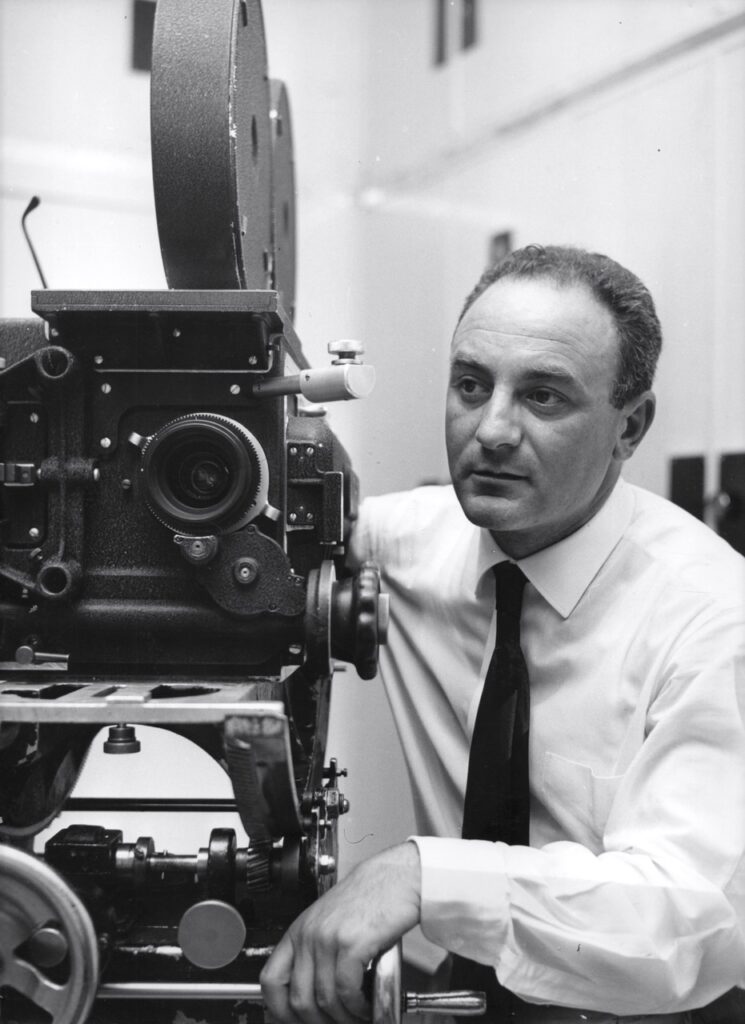
In 1938, a sixteen-year-old Roman boy abandons his studies and enters Cinecittà as an assistant camera operator. He apprentices with Ubaldo Arata, one of the greats of Fascist-era film photography. That boy’s name is Antonio Delli Colli, Tonino to everyone. He would become one of the greatest directors of photography in cinema history.
His debut came very young, in 1943, with “Finalmente sì,” a comedy in the white telephone style. But after the war, due to his too-young age, he had to return to working as a camera operator. In 1952 he signed Steno’s “Totò a colori”—the first Italian film shot entirely in color. Then years of honest craftsmanship, pleasant comedies, commercial cinema.
The turning point is 1961. Producer Alfredo Bini calls him for “Accattone,” Pier Paolo Pasolini’s directorial debut. The poet wants cinematography that underscores the “archaism” of Rome’s borgate. Delli Colli procures coarse-grained Ferrania film stock, exploits the imperfections of expired negatives, invents a black and white that no one has ever seen. It is the beginning of a partnership that would cover almost all of Pasolini’s production: “Mamma Roma,” “The Gospel According to St. Matthew,” “Hawks and Sparrows,” the Trilogy of Life, up to “Salò.”
In 1966 he meets Sergio Leone. “The Good, the Bad and the Ugly” brings to the world his boundless panoramas and extreme close-ups on the actors’ eyes. Then “Once Upon a Time in the West” and “Once Upon a Time in America.” And when Federico Fellini parts ways with Giuseppe Rotunno, it is Tonino Delli Colli who signs his last three masterpieces: “Ginger and Fred,” “Intervista,” “The Voice of the Moon.”
Jean-Jacques Annaud wants him for “The Name of the Rose.” Roman Polański for “Bitter Moon.” Roberto Benigni for “Life Is Beautiful”—David di Donatello 1998. Six Nastri d’Argento, four Davids, the Lifetime Achievement Award from the American Society of Cinematographers.
Skeptical and sly, cynical and disenchanted, Tonino Delli Colli embodied the prototype of the Cinecittà craftsman: lacking formal education but gifted with an instinctive talent for light that illuminated half a century of Italian cinema.
Written, edited, and directed by: Donatella Baglivo
Editing: Nicola Lopatriello – Giampaolo Triggiani
Executive producer: Jonathan Zonin
Director of photography: Elio Bisignani
Assistant camera operator: Noé Orlando Pernia Penalver
Sound technician: Juan Carlos Sanz Gonzales
Audio mixer: Giampaolo Triggiani
Titles: Giampaolo Triggiani
Original music: Carlo Putelli – Giacomo Rendine
Opening theme music: Pietro Grignani
Archives: Istituto Luce S.p.A.
Film archive supervisor: Massimo Mastrogiovanni
Historical archive supervisor: Kemal Tugal
Post-production: CIAK 2000 Rome
Music publishing: CIAK 2000
A production of CIAK 2000 S.r.l. – Rome – Copyright 2012
The production wishes to thank Tonino Delli Colli for his willingness to entrust his personal memories to the viewers.